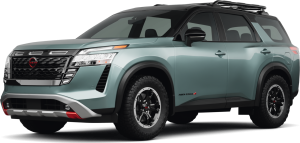
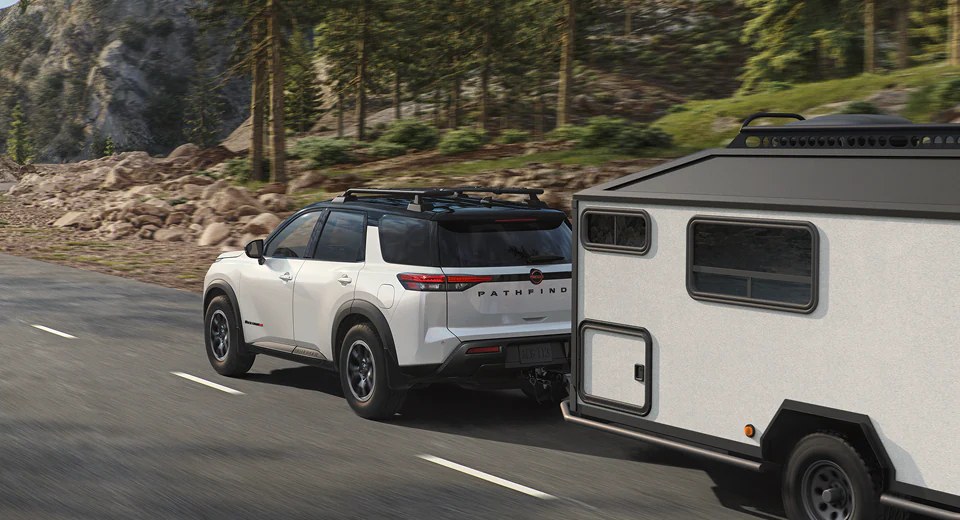

Here's the mistake we see most at Smithtown Nissan in St. James: someone buys an all-wheel-drive Pathfinder, the first nor'easter hits, and they drive like the system will help them stop. It won't. AWD is great at getting you moving and keeping you pointed straight, but your brakes and tires still do the stopping. Once that's clear, deciding whether AWD is worth it gets a lot easier, so let's walk through it from the basics up.
What does AWD actually do on a Pathfinder?
On recent Pathfinders, Nissan calls the system Intelligent 4WD, but day to day it works the way most people picture all-wheel drive. You don't flip a lever or think about it. Most of the time the SUV drives mainly through the front wheels, and when it senses a tire starting to slip, it sends power toward the rear to help you keep traction.
Newer models also have a terrain mode selector. It lets you tell the vehicle what you're dealing with, like snow, sand or mud, so it can adjust how power and traction control behave. Older Pathfinders handle things a little differently depending on the year, so ask about the specific vehicle you're looking at.
What AWD does well:
- Pulling away from a stop on snow, slush or wet leaves
- Climbing a slick driveway or hill without spinning
- Feeling steadier when one side of the road is icier than the other
What it doesn't do is shorten your stopping distance or help you take a corner faster on ice. A front-drive and an AWD Pathfinder on the same tires stop about the same way. Keep that in mind and the system will never surprise you.
Do Long Island winters really call for it?
Honestly, it depends on your street more than the island. Main roads like the LIE and Jericho Turnpike usually get plowed and salted fast. Where people get stuck is the last half mile: hilly North Shore neighborhoods, unplowed cul-de-sacs, steep driveways and the parking lot at work that nobody clears until noon.
If your daily route includes any of that, AWD stops being a luxury. Getting moving from a dead stop on a snowy incline is exactly where a front-drive SUV tends to spin and where AWD shines.
Think about your schedule too
Do you have to be somewhere no matter what, like a hospital shift, an early commute or a kid who needs a ride? If you can't wait for the plows, the extra traction means you leave on time instead of shoveling around a stuck tire.
On the other hand, if you work from home and can sit out the worst storm days, the case for AWD gets weaker. You'll still want solid tires, but you may not need to pay for traction you'd use a handful of times a year.
What do you give up by choosing AWD?
There's no free lunch here. An AWD Pathfinder usually costs more up front than the same trim with front-wheel drive. The extra hardware adds weight, which can nudge fuel economy down a bit compared with a front-drive model.
You're also adding parts that need attention over the years. The system has its own fluids and components, and they need periodic service. That isn't a big deal if you stay on schedule, but it's worth knowing before you buy.
Here's how most people weigh it:
- Upfront price: higher on AWD, so compare the difference against how often you'd use it
- Running costs: a little more fuel and some extra maintenance over time
- Resale: on Long Island, AWD SUVs tend to be in demand, which can help when you sell or trade later
That last point catches people off guard. A front-drive SUV can be harder to move when the next buyer is also thinking about snow. When you browse new Pathfinder inventory, look at the AWD and front-drive versions side by side so you can see the real gap for the trim you actually want, not a ballpark guess.
Who can safely skip AWD?
Plenty of people do just fine without it. If you live on a flat, well-plowed street, park in a garage and mostly drive main roads, a front-drive Pathfinder with good winter or all-weather tires will handle a typical Long Island winter better than an AWD model on worn all-seasons.
That's the part people don't expect. Tires are what actually touch the road, and a front-drive SUV on great tires often beats an AWD SUV on bald ones, especially for braking and turning.
You're a good candidate for front-drive if:
- Your commute is mostly highway and major roads
- You can stay home on bad storm days
- Your budget is tight and you'd rather put the difference toward a second set of tires
Buying used opens up another option. Shopping certified pre-owned Pathfinders can bring an AWD model closer to the price of a new front-drive one, so you may not have to choose between traction and budget after all. Just check the tire tread and service records on any used AWD vehicle. Mismatched or neglected tires can be hard on the drivetrain, which brings us to the next point.
Does AWD help with towing, boat ramps and beach trips?
This is where AWD earns its keep for many Long Island families. If you tow a boat, you know the ramp is the hardest part. Wet, slimy concrete at an angle, with a heavy trailer behind you, is a recipe for front tires spinning. Power going to the rear wheels makes a real difference when you're pulling a boat out of the water.
Front-drive vehicles have a specific problem here. When you hitch a trailer, the tongue weight pushes down on the back of the SUV and takes some weight off the front tires, right when they need grip the most. AWD helps make up for that.
Sand and dirt
If you like heading out to the South Shore beaches or down a dirt road to a campsite, the sand and mud settings on newer Pathfinders are genuinely useful. Beach driving areas usually have their own rules and permits, and many require four-wheel drive, so check the requirements before you go and air down your tires the way the local guidelines recommend.
AWD won't turn a family SUV into a rock crawler. For the soft, loose stuff most people actually drive on, though, it gives you a lot more confidence.
What's the expert tip most owners miss?
Treat your tires as part of the AWD system, because they are. The system constantly compares how fast each wheel is turning. If one tire is noticeably more worn or a different size, the system can read that as slipping and work harder than it should, which adds wear over time.
Here's what to stay on top of:
- Rotate tires on schedule so all four wear evenly
- Replace tires in a full set of four whenever you can, not one at a time
- If one tire gets ruined early, ask whether the others can be matched closely enough or whether the new one should be shaved to match
- Keep pressures equal, and check them often in winter when cold air drops them
The second habit is keeping up with the drivetrain fluids. These are easy to forget because nothing feels wrong until it is. Your owner's manual lists the intervals, and they're worth following, especially if you tow or drive in salty slush.
Smithtown Nissan has dedicated sales, service and parts departments, and service is open six days a week, including Saturday. That makes it easier to fit a rotation or fluid check in before the first storm. When you're ready, you can book service online and have the tires and AWD system looked at together.
St James, NY
- AWD helps you get moving and stay planted; it does nothing for braking.
- If you deal with hills, unplowed streets, boat ramps or beach trips, it earns its keep. If you mostly drive plowed roads, good tires on a front-drive Pathfinder may be enough.
- Tires matter more than anything else, so keep all four matched and rotated, and keep up with the drivetrain service.
Common questions
Can I leave my Pathfinder's AWD on all the time?
Do I still need winter tires if I have AWD?
Is AWD the same as four-wheel drive?
Will AWD make my Pathfinder safer in the rain?
Should I buy a used Pathfinder with AWD?